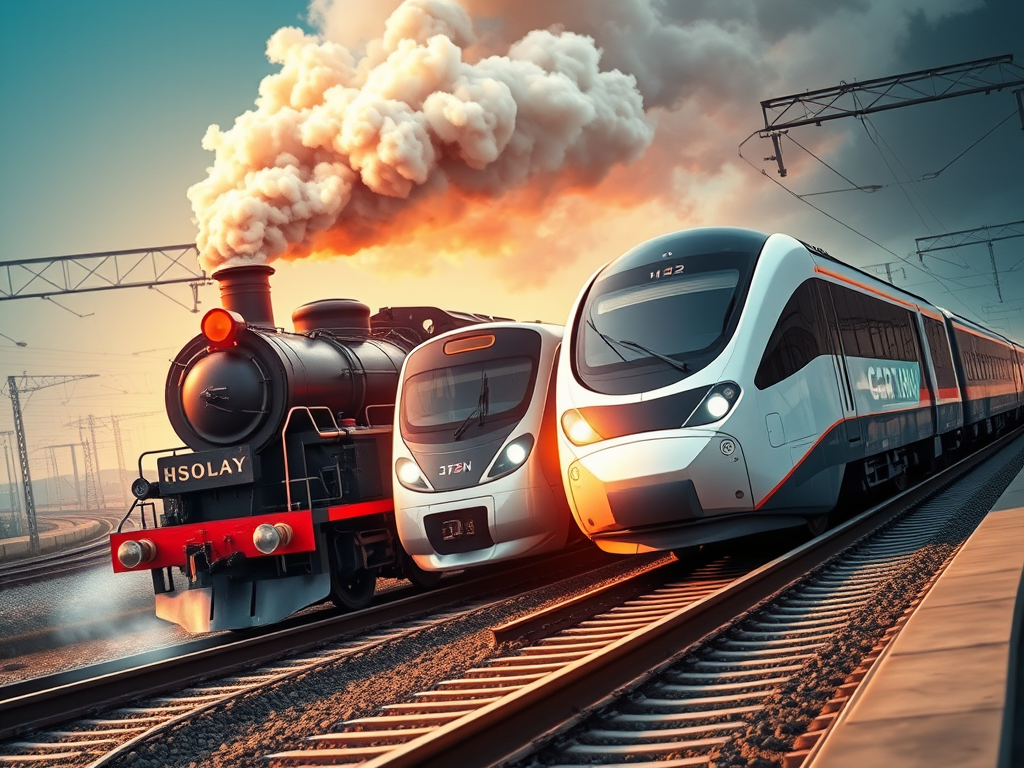
🚆 History of Rail Transport
🛤️ What is rail transport?
Rail transport means trains running on tracks to carry people and goods from one place to another.
🗿 1. Early beginnings (Before trains)
- Long ago, people used wooden rails in mines
- Carts with wheels rolled more easily on rails
- Pulled by horses 🐎
🧠 Rails helped reduce friction (made moving easier)
🔥 2. Steam engine trains (1800s)
- The big change came with the steam engine
- Trains used coal and water to make steam
- Steam pushed pistons → wheels moved
👨🔧 George Stephenson built one of the first successful steam trains
🚂 His train was called Locomotion No. 1
🌍 Why steam trains were important
- Faster travel than horses
- Carried heavy goods
- Helped cities grow
- Connected countries
⚡ 3. Electric trains (Late 1800s–1900s)
- Used electricity instead of coal
- Cleaner and quieter
- Faster acceleration
🚆 Common in cities and subways
⛽ 4. Diesel trains (1900s)
- Used diesel fuel
- Easier to maintain than steam
- Could travel long distances
🚄 5. Modern high-speed trains (Today)
- Use advanced technology
- Some trains go 300 km/h or more
- Examples:
- Bullet Train (Japan) 🇯🇵
- TGV (France) 🇫🇷
- Maglev (uses magnets!) 🧲
🧲 Future of rail transport
- Magnetic levitation (Maglev) trains
- Super fast and smooth
- Less pollution 🌱
🧠 Easy timeline to remember
- 🐎 Horse-drawn rails
- 🔥 Steam trains
- ⛽ Diesel trains
- ⚡ Electric trains
- 🚄 High-speed & Maglev
⭐ Fun facts for kids
- Trains helped deliver food and mail 📦
- Railways helped people explore new places
- Some trains can float above tracks using magnets!
 Beyond Science
Leave a comment