
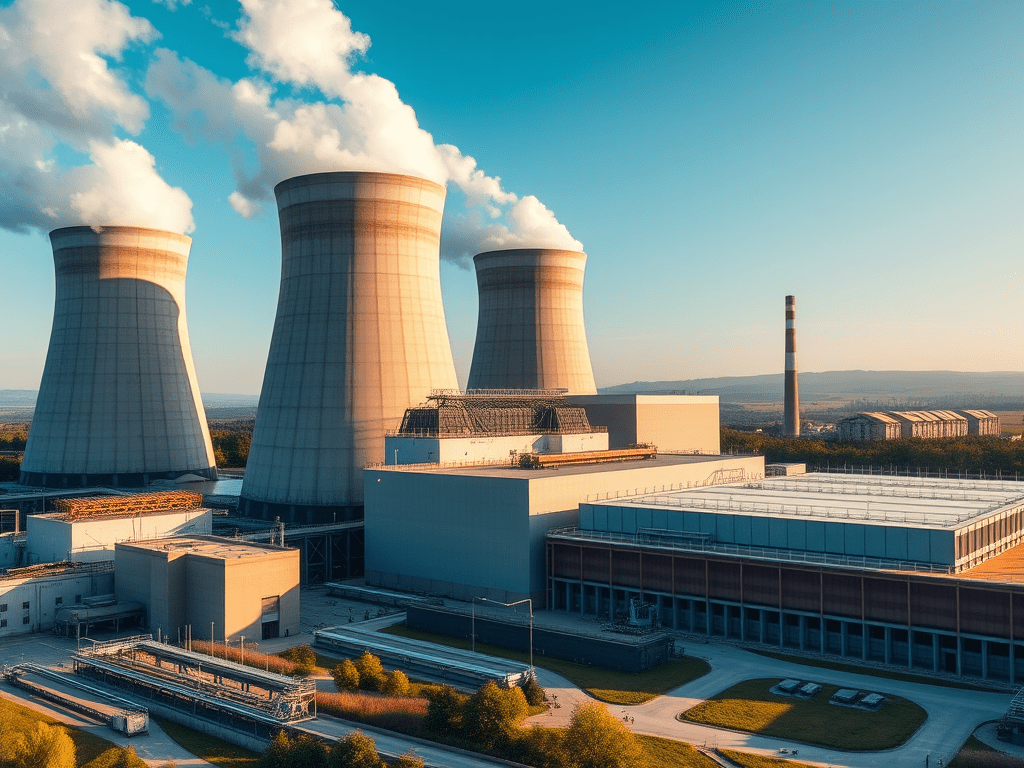
⚛️ How a Nuclear Power Plant Works
⚙️ How does a nuclear power plant work?
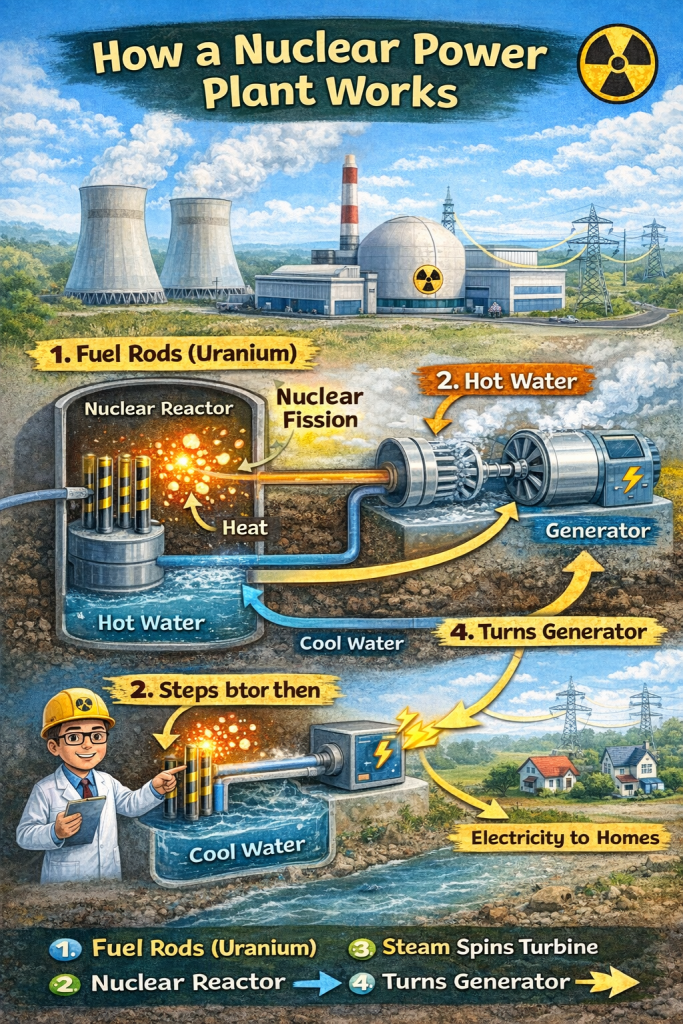
Step-by-step (simple):
1️⃣ Fuel rods (uranium) split inside the reactor
2️⃣ This process is called nuclear fission
3️⃣ Fission makes a lot of heat 🔥
4️⃣ Heat turns water into steam 💨
5️⃣ Steam spins a turbine
6️⃣ Turbine turns a generator → electricity ⚡
7️⃣ Electricity goes to homes 🏠
🧠 It’s like a steam engine, but the heat comes from atoms!
🌱 Benefits of nuclear power
👍 Clean energy
- Very low air pollution
- No smoke or CO₂ like coal plants
⚡ Powerful energy
- Small fuel makes huge energy
- Works day & night (not weather-dependent)
🏭 Reliable
- Supplies electricity continuously
- Helps power big cities
⚠️ Dangers of nuclear power
☢️ Radiation risk
- Accidents can release harmful radiation
- Can affect people, land, and water
🔥 Rare but serious accidents
Examples:
- Chernobyl
- Fukushima
🧠 These are rare, but effects can be big.
🗑️ Long-term issues
☢️ Nuclear waste
- Waste stays dangerous for thousands of years
- Must be stored safely underground
💰 High cost
- Very expensive to build
- Expensive safety systems needed
🌍 Public concern
- People worry about safety
- Plants need strict rules and monitoring
🛡️ How plants stay safe
- Thick concrete walls
- Cooling systems
- Emergency shutdown controls
- Trained scientists & engineers
🧠 Easy way to remember
Nuclear power = very strong, very useful, needs great care
📌 One-line summary
Nuclear power makes electricity from splitting atoms, gives clean energy, but needs careful safety because of radiation and waste.
🌟 Fun facts for kids
- One uranium pellet = energy of 1 ton of coal!
- Nuclear plants don’t produce smoke
- Many countries use nuclear power safely
 Beyond Science
Leave a comment