
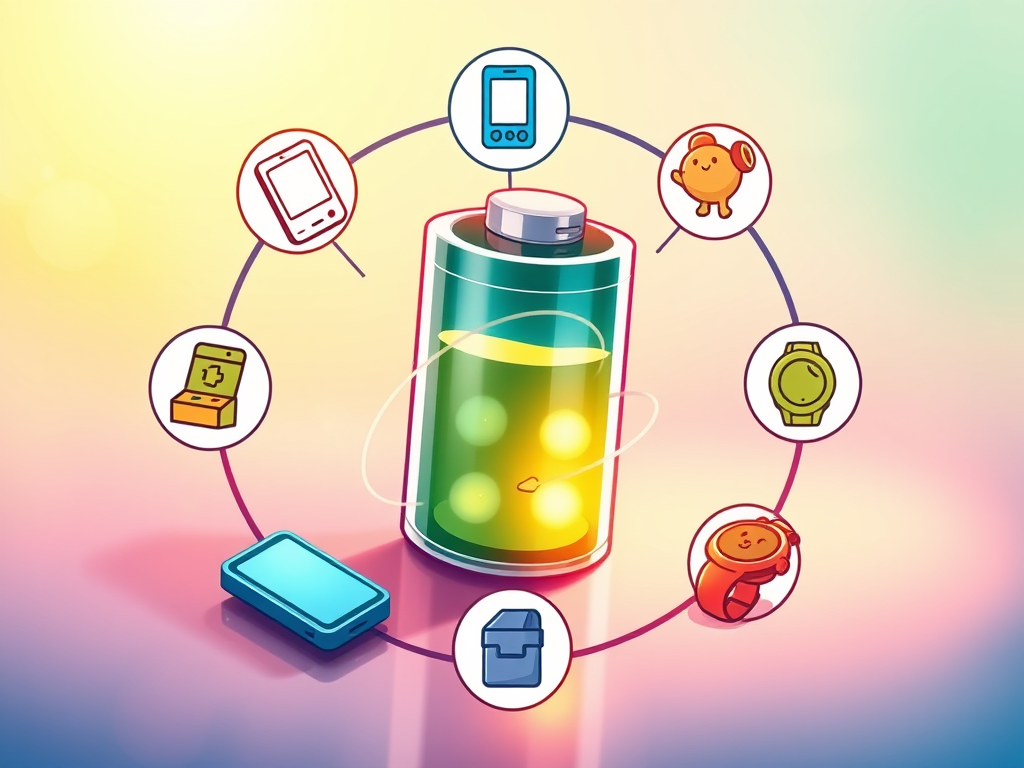
🔋 How Does a Battery Work?
🤔 What is a battery?
A battery is a small device that stores energy and gives it to things like:
- 📱 Phones
- 🔦 Flashlights
- 🎮 Toys
- ⌚ Watches
It provides electric power so these devices can work.
⚡ What is inside a battery?
Inside every battery there are three main parts:
- Positive side (+) → called the cathode
- Negative side (–) → called the anode
- Chemical liquid or paste → called the electrolyte
These chemicals create electricity.
🔄 How electricity is created
When you connect a battery to something (like a toy):
- A chemical reaction happens inside the battery 🧪
- This reaction releases tiny particles called electrons
- Electrons move from the negative side → positive side
This moving flow of electrons is called electricity ⚡
Electricity travels through wires and powers the device.
🔦 Example: Flashlight
When you turn on a flashlight:
- The battery sends electricity through the wire
- Electricity reaches the bulb 💡
- The bulb lights up
All this happens in less than a second!
🔋 Why batteries run out
Batteries stop working when the chemicals inside are used up.
No chemical reaction →
No moving electrons →
No electricity.
That’s why we replace or recharge them.
🔌 Rechargeable batteries
Some batteries can be recharged.
Examples:
- Phone batteries 📱
- Laptop batteries 💻
- Electric car batteries 🚗
Charging pushes electricity back into the battery, so the chemicals can work again.
🌟 Fun Facts
- The first battery was invented in 1800 by
Alessandro Volta ⚡ - The word “volt” (unit of electricity) is named after him.
- Some batteries are small like a coin, others are huge like the ones in electric cars.
🧠 Easy Way to Remember
A battery works because:
- 🧪 Chemicals react
- ⚡ Electrons start moving
- 🔌 Electricity flows to power devices
💭 Think About This
Batteries store energy so we can use electricity anywhere—even without a power plug.
 Beyond Science
Leave a comment