
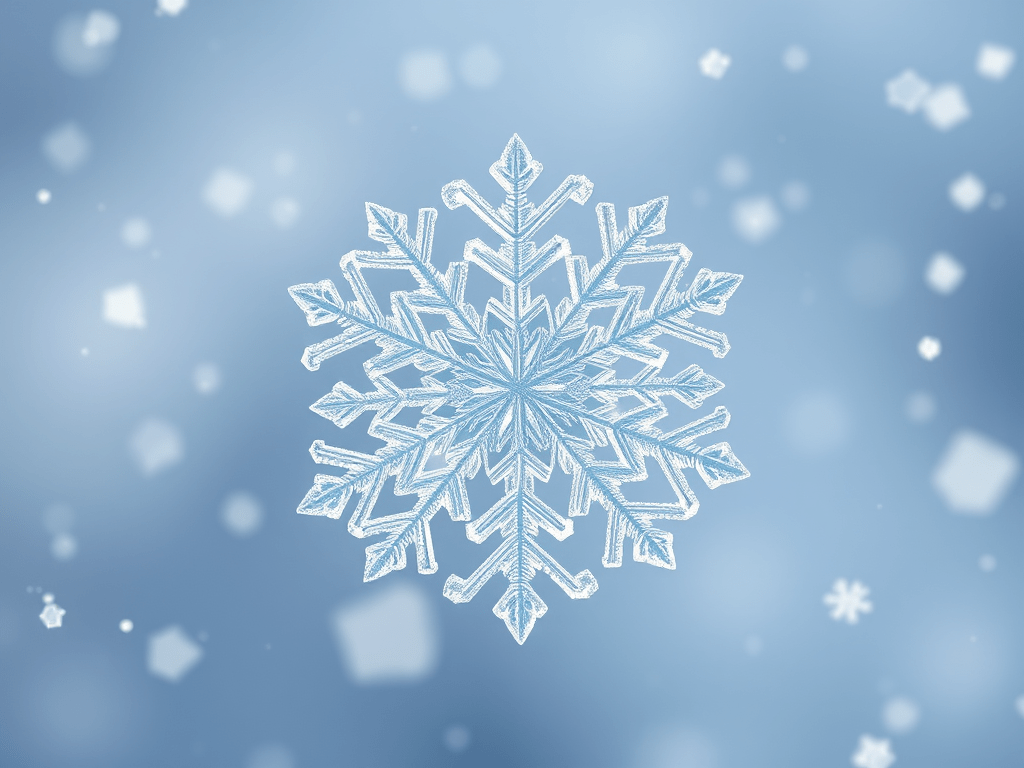
❄️ What is Snow?
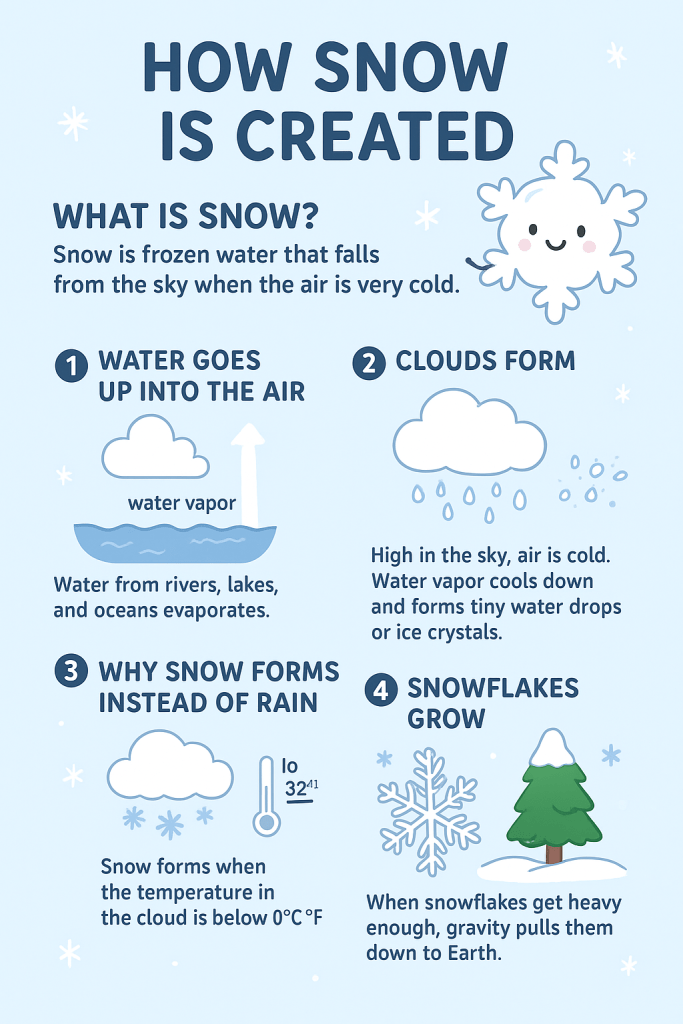
Snow is frozen water that falls from the sky when the air is very cold.
👉 Snow is made of ice crystals, not raindrops.
🌬️ Step 1: Water goes up into the air
- Water from rivers, lakes, and oceans evaporates (turns into invisible water vapor)
- The vapor rises into the sky
☁️ Step 2: Clouds form
- High in the sky, air is cold
- Water vapor cools down and forms tiny water drops or ice crystals
- These collect together to make clouds
❄️ Step 3: Why snow forms instead of rain
Snow forms when:
- The temperature in the cloud is below 0°C (32°F)
- Water vapor freezes directly into ice crystals
👉 Instead of becoming liquid rain, it becomes solid ice
❄️ Step 4: Snowflakes grow
- Tiny ice crystals stick together
- They grow into snowflakes
- Each snowflake has a special shape
🌟 No two snowflakes are exactly the same!
🌨️ Step 5: Snow falls to the ground
- When snowflakes get heavy enough
- Gravity pulls them down to Earth
- If the air stays cold, they reach the ground as snow
If the air becomes warm:
- Snow melts → rain or sleet
🧊 Why snow is white?
Snow looks white because:
- Snowflakes have many flat surfaces
- They reflect light
- All colors of light together look white
🧠 Simple science summary
🌬️ Water vapor rises
☁️ Freezes in cold clouds
❄️ Forms ice crystals
🌨️ Falls as snow
🌟 Fun snow facts
- Snowflakes grow inside clouds
- Snow helps keep the ground warm like a blanket
- Fresh snow makes places quiet
🎯 Easy to remember
Very cold clouds + water vapor = snow
 Beyond Science
Leave a comment