
📏 What Is the Planck Length?
🤔 What is Planck length?
The Planck length is the smallest length scientists can talk about in physics.
- It is super, super tiny
- Much smaller than an atom ⚛️
- Even smaller than parts inside an atom
🧠 It’s like the smallest “pixel” of space!
🔢 How small is it?
- Planck length ≈ 0.000000000000000000000000000000000016 meters
- Written as: 1.6 × 10⁻³⁵ meters
😲 That’s tiny beyond imagination!
🧪 Why is it important?
- Below this size, our current science stops working
- Space and time may behave strangely
- Scientists believe space might be grainy, not smooth
🧠 Easy way to imagine
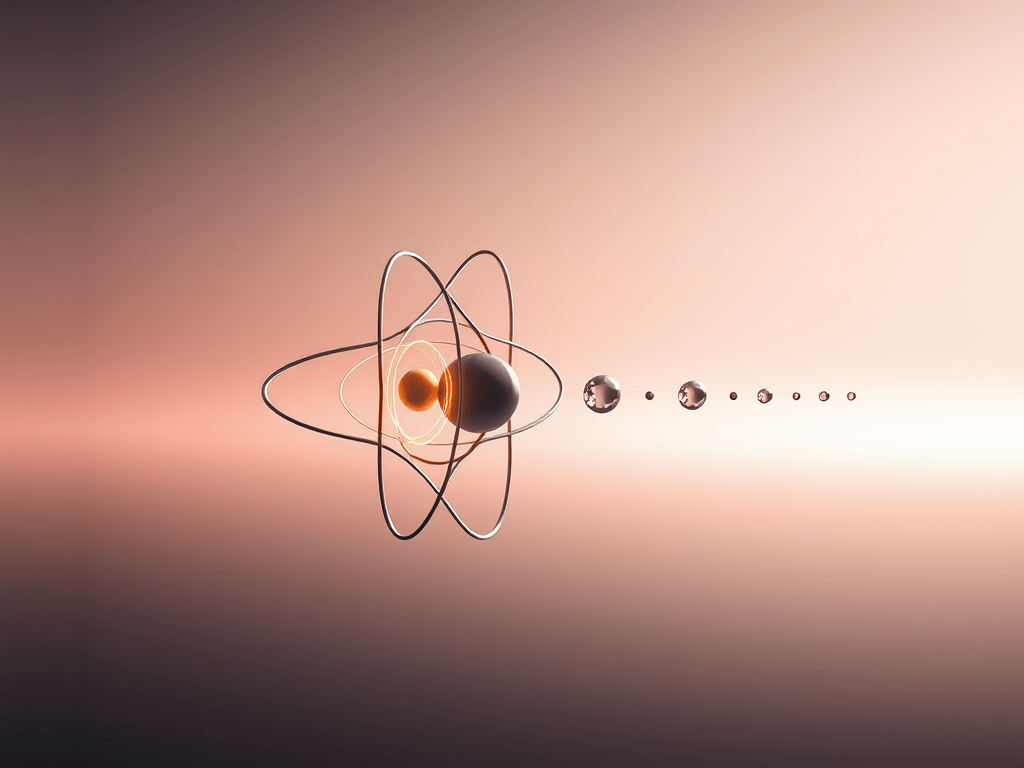
- Atom ⚛️ → very small
- Nucleus → smaller
- Proton → even smaller
- Planck length → smallest we know
🔬 Can we see it?
❌ No
- Even the strongest microscopes can’t see it
- It’s a theoretical limit
🧠 Easy to remember
Planck length is the tiniest possible size of space
⭐ Fun facts
- Named after scientist Max Planck
- Used in theories about black holes and the Big Bang
- Helps scientists study quantum gravity
⚠️ Important note for kids
- It doesn’t mean space is made of blocks
- It means our math and physics can’t go smaller (yet!)
 Beyond Science
Leave a comment