
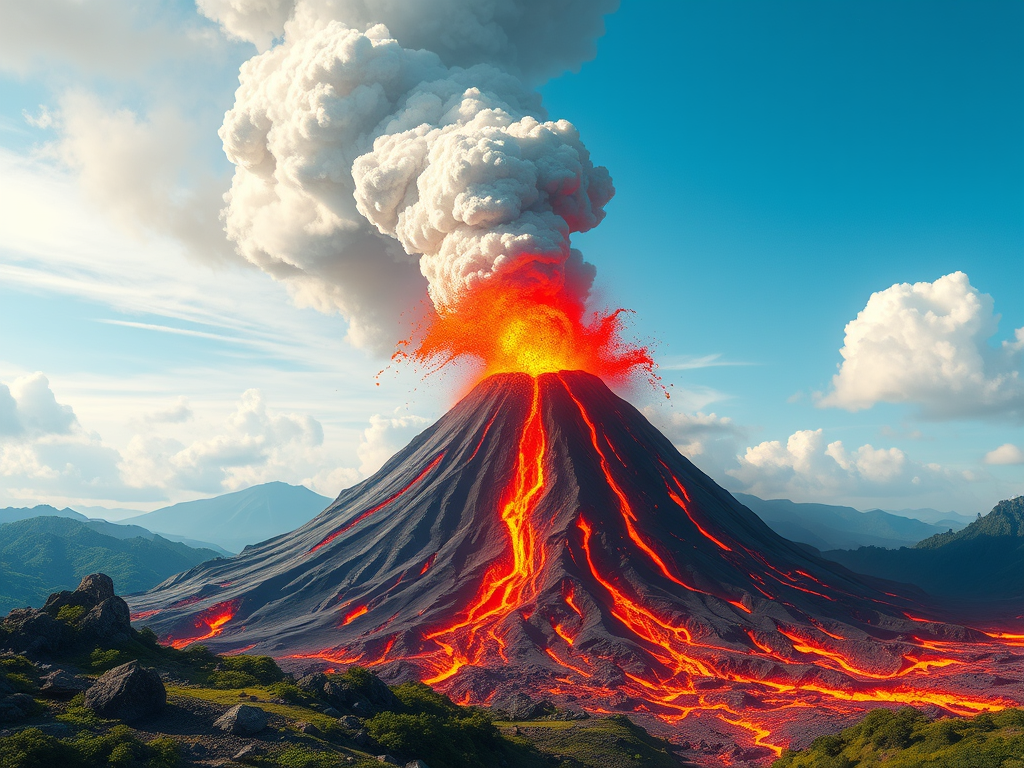
🌍 What is a volcano?
A volcano is an opening in the Earth where hot melted rock can come out.
When a volcano erupts, it releases:
- Lava (melted rock) 🔥
- Ash ☁️
- Gases 💨
🔥 What is inside the Earth?
- Deep inside Earth, it is very hot
- Rocks melt and form magma
- Magma stays underground until pressure pushes it up
🌋 How does a volcano erupt?
1️⃣ Magma builds up under the ground
2️⃣ Pressure increases
3️⃣ Magma moves up through cracks
4️⃣ It comes out as lava
🧭 Main parts of a volcano
- Magma chamber – where magma is stored
- Vent – path magma travels up
- Crater – opening at the top
- Lava flow – melted rock flowing out
🌎 Types of volcanoes (simple)
- Active – erupting or may erupt again
- Dormant – sleeping, but can wake up
- Extinct – will not erupt again
🌱 Are volcanoes useful?
Yes! Volcanoes:
- Make new land
- Create fertile soil for farming
- Give minerals and geothermal energy
🌋 Where are volcanoes found?
- Mostly near tectonic plates
- Around the Ring of Fire 🌍🔥
🧠 Easy to remember
Volcano = Earth’s way of releasing heat and pressure
⭐ Fun facts for kids
- The biggest volcano is Mauna Loa (Hawaii)
- Some volcanoes erupt under the sea
- Lava can be hotter than 1000°C
 Beyond Science
Leave a comment