
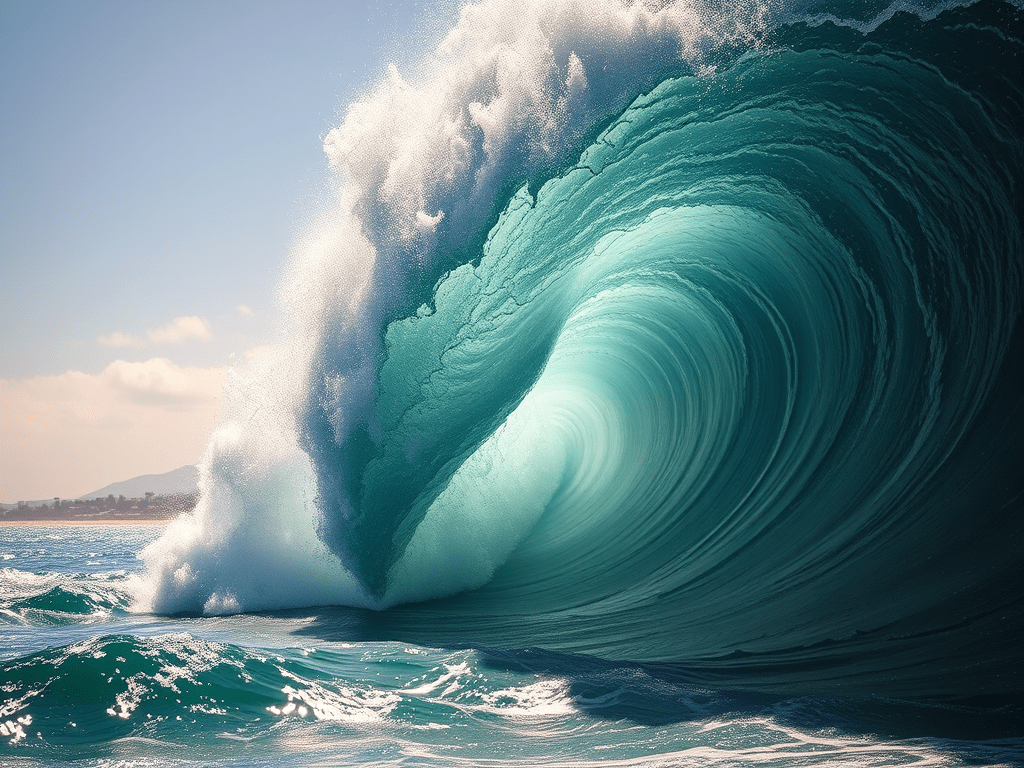
🤔 What is a tsunami?
A tsunami is a series of very large ocean waves caused by a sudden movement under the sea.
👉 It is not a normal wave made by wind.
⚡ What causes a tsunami?
Most tsunamis are caused by:
- 🌍 Underwater earthquakes
- 🌋 Volcanic eruptions
- 🪨 Landslides under the sea
- ☄️ Meteor impacts (very rare)
🌊 How does a tsunami form?
1️⃣ Earthquake shakes the ocean floor
2️⃣ Water is suddenly pushed up
3️⃣ Huge waves move across the ocean
4️⃣ Near land, waves grow taller and stronger
🏖️ Why are tsunamis dangerous?
- Waves can be as tall as buildings
- They move very fast 🚄
- Water rushes inland and causes flooding
🧠 Tsunamis can travel thousands of kilometers.
⚠️ Warning signs of a tsunami
- Strong earthquake near the coast
- Sea water suddenly moves away from shore
- Loud ocean roar 🌊
👉 Move to higher ground immediately!
🛡️ Can tsunamis be predicted?
- Scientists use tsunami warning systems
- Sensors in the ocean detect earthquakes
- Alerts are sent to coastal areas 🚨
🌟 Fun facts for kids
- Tsunami means “harbor wave” in Japanese
- In deep ocean, waves are low but very fast
- One tsunami is actually many waves
🧠 Easy way to remember
Tsunami = Big waves caused by Earth shaking under the sea
📌 One-line summary
A tsunami is a powerful ocean wave caused by sudden movements of the ocean floor.
 Beyond Science
Leave a comment