
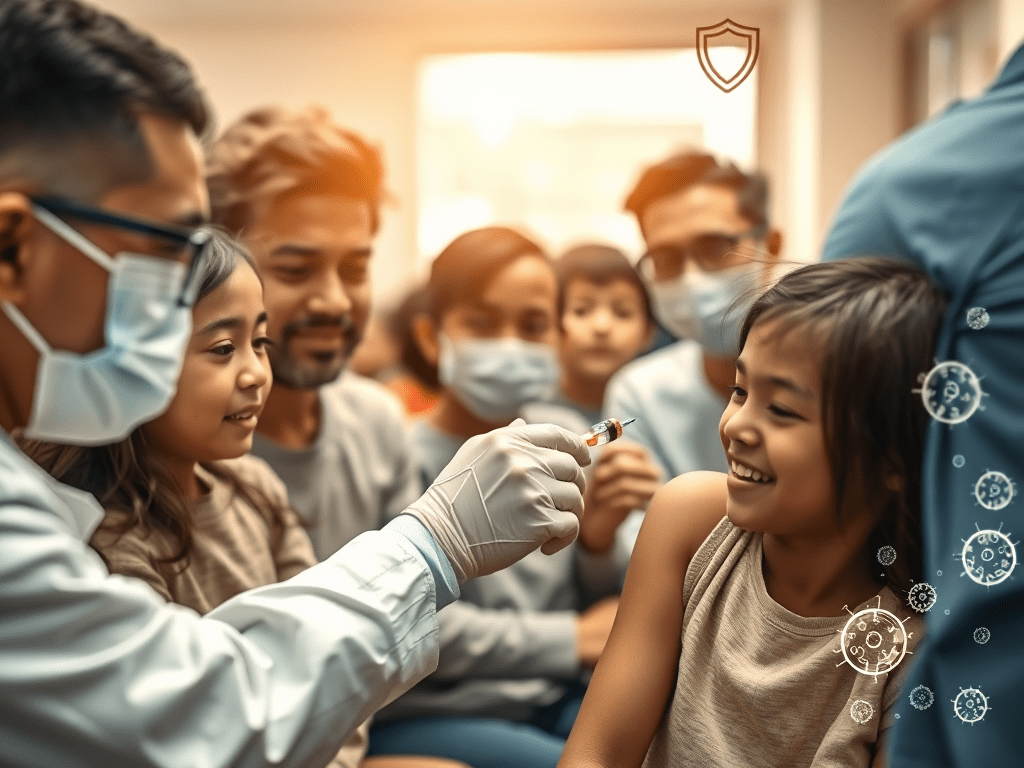
💉 How Do Vaccines Work?
🛡️ What is a vaccine?
A vaccine is a medicine that trains your body to fight germs (like viruses or bacteria) without making you sick.
Think of it as a practice lesson for your immune system 🧠💪
🦠 What are germs?
Germs are tiny living things that can make us sick:
- Viruses 🤧
- Bacteria 🦷
⚙️ How a vaccine works (step by step)
1️⃣ Vaccine enters the body
- It contains a weak, killed, or tiny piece of a germ
- This piece is safe
2️⃣ Immune system learns
- Your body sees the germ and says:
“Hey! This doesn’t belong here!” 🚨 - It makes antibodies (tiny soldiers 🛡️)
3️⃣ Memory cells are created
- Your body remembers the germ
- These memory cells stay for a long time 🧠
4️⃣ Real germ attacks later
- If the real germ enters:
- Antibodies attack it fast ⚔️
- You don’t get sick (or only very mildly)
🧠 Easy way to remember
Vaccines teach your body how to fight before the real fight happens
🌟 Why vaccines are important
- Protect you from serious diseases
- Stop germs from spreading
- Protect babies and older people 👶👵
- Help keep schools and communities safe 🏫
💪 What about side effects?
- Mild pain or fever 🤒
- This means your immune system is learning
- Serious problems are very rare
🌍 Diseases vaccines help prevent
- Polio
- Measles
- Tetanus
- COVID-19
- Flu
📌 One-line summary
A vaccine helps your body learn to fight germs so you don’t get sick later.
 Beyond Science
Leave a comment