
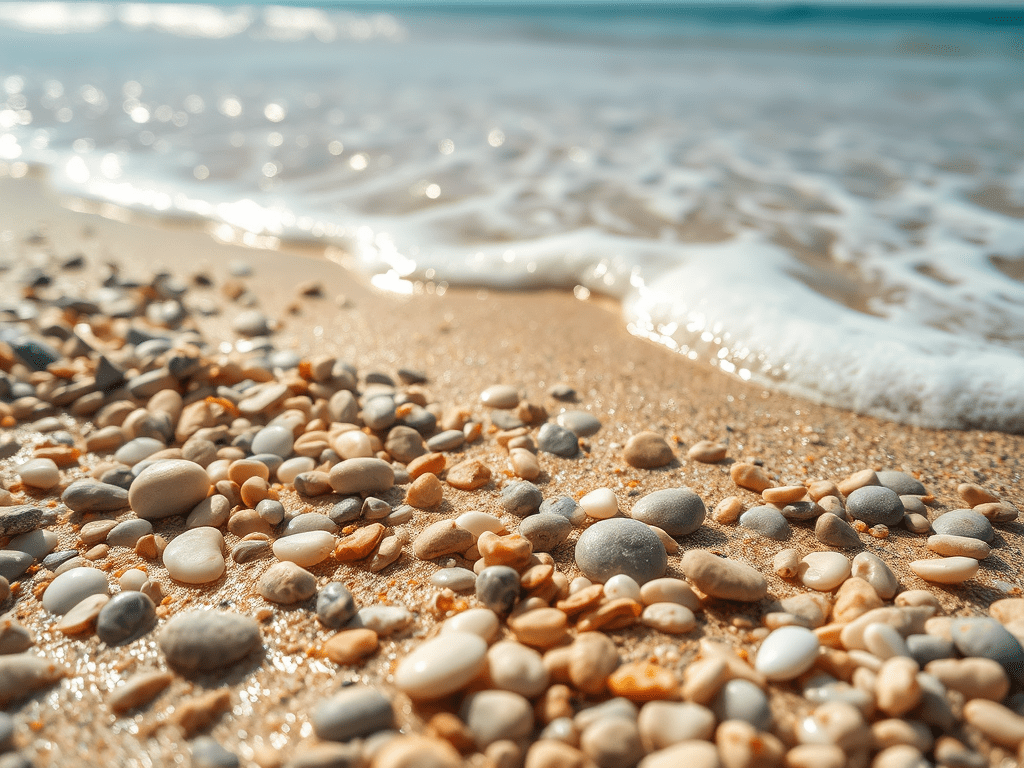
🌊 Why Don’t We See Many Stones Around the Sea?
🪨 First, are there stones near the sea?
Yes — there are stones, but many of them:
- Become sand
- Or get smooth and small, so we don’t notice them
🌊 What happens to stones near the sea?
1️⃣ Waves break stones into sand
- Sea waves hit rocks again and again
- Rocks bump into each other
- They slowly break into tiny pieces
👉 These tiny pieces are called sand 🏖️
2️⃣ Stones get smooth and round
- Stones roll with waves
- Sharp edges wear away
- They become small, smooth pebbles
That’s why beach stones feel smooth 😊
3️⃣ Water carries stones away
- Strong waves and tides move stones
- Big stones stay deep underwater
- Small pieces are carried far away
4️⃣ Sand sinks, big rocks stay hidden
- Sand settles on the beach
- Big rocks are often:
- Underwater 🌊
- At the bottom of cliffs 🪨
🏖️ Why beaches are sandy, not rocky?
- Waves sort materials:
- Light, small pieces → beach
- Heavy, big rocks → left behind or underwater
🧠 Easy way to remember
The sea is a natural rock grinder
🌟 Fun facts for kids
- Sand comes from rocks, shells, and corals
- Some beaches have black sand (volcanoes!)
- Some beaches have pebbles instead of sand
📌 One-line summary
Sea waves break stones into tiny pieces over time, turning them into smooth pebbles and sand.
 Beyond Science
Leave a comment