
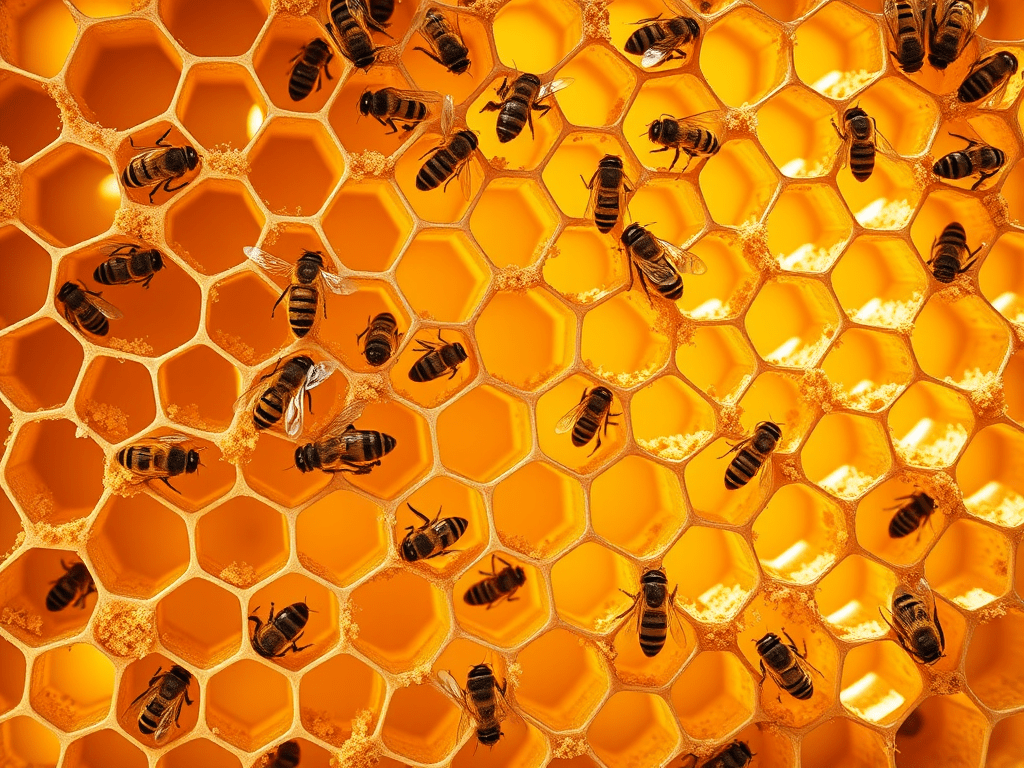
🍯 Honeycomb Hexagon Science
Why hexagons are so strong and efficient
🐝 What is a honeycomb?
A honeycomb is the structure bees build to:
- Store honey 🍯
- Store pollen 🌼
- Grow baby bees 🐝
Each small room is shaped like a hexagon (6 sides).
🔷 Why hexagon shape?
1️⃣ Uses the least material (Very efficient!)
- Hexagons fit together perfectly
- No gaps, no wasted space
- Bees use less wax to store more honey
👉 That saves energy for bees 💪
2️⃣ Very strong shape 🧱
- The weight of honey is shared evenly
- Hexagons spread pressure to all sides
- The comb does not easily break
👉 Strong but light!
3️⃣ Best shape compared to others
If bees used:
- Circles ❌ → gaps appear
- Squares ❌ → weaker
- Triangles ❌ → less space
✔️ Hexagon = strongest + most space
🧠 Simple example for kids
Imagine building a floor with tiles:
- Hexagon tiles fit tightly
- The floor becomes strong and stable
- No cracks or gaps
🌍 Humans copy honeycomb science!
We use honeycomb designs in:
- Airplanes ✈️
- Buildings 🏢
- Bridges 🌉
- Cardboard boxes 📦
- Helmets ⛑️
Because it’s light, strong, and saves material
🌟 Fun facts
- Bees didn’t “learn math” — nature chose the best shape!
- Honeycomb cells are angled slightly to stop honey from dripping
- A honeycomb can hold many times its own weight
🧠 Easy way to remember
Hexagons are strong, save space, and waste nothing
📌 One-line summary
Honeycomb hexagons are the strongest and most efficient shape for storing honey using the least material.
 Beyond Science
Leave a comment